Sudoku: A Timeless Puzzle for Sharper Minds and Digital Entrepreneurs
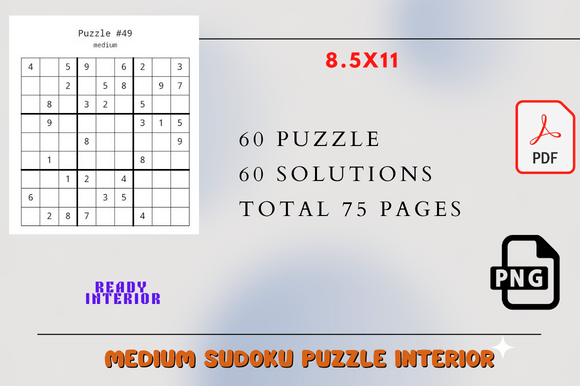
The simple grid of numbers, the satisfying logic, the quiet triumph of a completed puzzle—Sudoku has captivated millions worldwide. But beyond its reputation as a beloved pastime, Sudoku offers a fascinating intersection of cognitive exercise, accessible education, and modern digital opportunity. This article explores the enduring appeal of Sudoku, its benefits, and how it has seamlessly transitioned from newspaper pages into the digital marketplace, exemplified by products like a "KDP Interior Sudoku Puzzle Book – 60 Medium Puzzles with Solutions."
The Foundational Logic of Sudoku
To appreciate Sudoku's significance, one must start with its elegant rules. At its core, Sudoku is a logic-based, number-placement puzzle. The goal is to fill a 9x9 grid so that each column, each row, and each of the nine 3x3 sub-grids (called "boxes" or "regions") contains all of the digits from 1 to 9. The puzzle begins with some cells already filled in, providing the clues. There is no mathematics involved; no arithmetic is required. Success depends purely on deduction, pattern recognition, and logical inference.
This seemingly simple framework is why Sudoku is both approachable for beginners and endlessly engaging for experts. A beginner might start with "easy" puzzles, learning basic techniques like scanning for single missing numbers in a row or column. As one progresses to "medium" puzzles, like those found in a 60-puzzle collection, more advanced strategies come into play—such as looking for "hidden pairs" or using "box-line reduction." Each solved puzzle reinforces logical thinking without the pressure of mathematical skill, making it a uniquely inclusive brain exercise.
Common Misunderstandings About Sudoku
Many assume Sudoku is about math or memory. This is a fundamental misconception. While numbers are the symbols used, the puzzle is about logic and constraint satisfaction. You could replace digits with letters, colors, or shapes, and the puzzle's nature would remain identical. Another common assumption is that solving Sudoku requires innate genius. In reality, it is a skill built through practice and learned techniques. Anyone can improve with exposure to a graded series of puzzles, moving from easy to medium to hard.
The Purpose and Significance: More Than Just a Game
Sudoku serves multiple profound purposes in modern life. Its primary significance lies in cognitive maintenance and development. Regularly engaging with Sudoku puzzles exercises critical brain functions: concentration, short-term memory, and logical reasoning. It forces the solver to hold multiple possibilities in mind, test hypotheses, and make decisions based on incomplete information—skills directly transferable to problem-solving in work and daily activities.
In educational contexts, Sudoku is a powerful tool for teaching logical thinking to students of all ages. It introduces concepts of systematic search and rule-based deduction without the abstraction of formal logic notation. For adults, it acts as a mental "workout," a form of cognitive leisure that combats mental stagnation. In a world saturated with passive entertainment, Sudoku offers active, engaging mental stimulation.
Practical Relevance in Daily Life and Work
The logical frameworks practiced in Sudoku mirror the processes needed in many professional fields. Software debugging, project planning, strategic analysis, and even everyday tasks like organizing a schedule or troubleshooting a home issue all require the same step-by-step, evidence-based deduction. Sudoku trains the mind to approach complex problems by breaking them into smaller, manageable constraints (like the 3x3 boxes within the larger grid), a strategy applicable to virtually any multifaceted challenge.
Sudoku in the Digital Age: Creativity, Technology, and Business
The transition of Sudoku from print to digital formats highlights its adaptability and ongoing relevance. While the puzzle itself is analog, its distribution, creation, and consumption have been revolutionized by technology. This is where the concept of a KDP Interior Sudoku Puzzle Book becomes particularly illustrative. KDP (Kindle Direct Publishing) is Amazon's platform allowing creators to self-publish books and content.
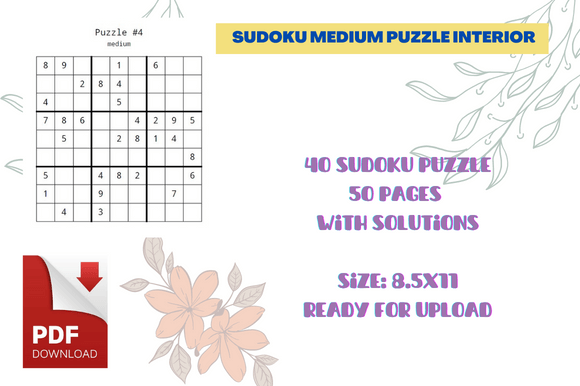
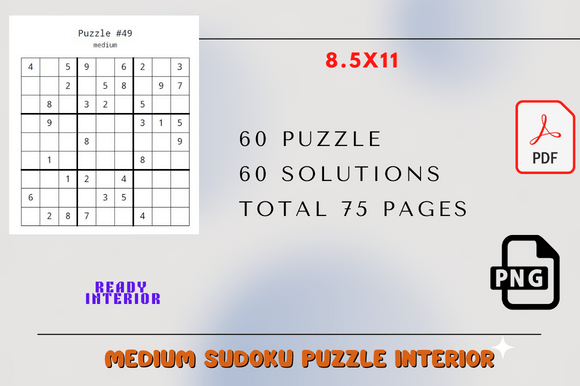
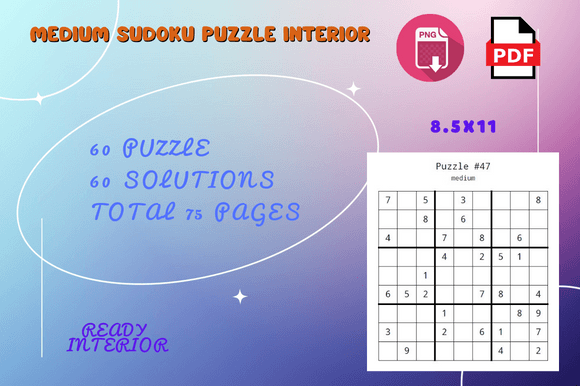
A product titled "60 Medium Sudoku Puzzles with Solutions – KDP Interior ready to upload" represents a modern fusion of traditional puzzle design with digital entrepreneurship. The "interior" refers to the professionally formatted PDF file (typically 75 pages for 60 puzzles), designed to the exact specifications (8.5"x11") required for seamless upload and printing through KDP. Each puzzle is "one per page" for clarity, and solutions are included, providing a complete, user-friendly product.
The Digital Product Creation Process
Creating such a Sudoku book involves several steps that blend creativity with technical know-how:
- Content Generation: All puzzles must be newly generated, ensuring originality and a unique challenge for buyers. This often involves using algorithmic Sudoku generators and human checking for quality and difficulty grading.
- Design and Formatting: The interior must be clean, consistent, and KDP-compliant. This includes proper page layout, readable fonts, and a logical arrangement of puzzle pages followed by solution pages.
- Business Packaging: The product is framed not just as puzzles, but as a complete book—a ready-to-use physical or digital item that serves a specific audience: puzzle enthusiasts looking for a curated, medium-difficulty challenge.
This process demonstrates how a classic, non-digital activity like Sudoku can thrive in the contemporary ecosystem of self-publishing, niche markets, and on-demand printing. It empowers creators to turn a logical hobby into a viable micro-business, reaching a global audience through platforms like Amazon.
Building a Broader Understanding: Sudoku as a Cultural Phenomenon
Sudoku's journey from a niche puzzle called "Number Place" in American magazines to a global phenomenon underscores its universal appeal. Its spread was catalyzed by the internet and international publications, proving that the human desire for structured logical challenge is widespread. Today, Sudoku exists in countless forms: mobile apps with daily puzzles, competitive Sudoku tournaments, variations like Sudoku with letters or larger grids (Hexadoku), and of course, the vast market of physical puzzle books.
The availability of specialized products, such as books focusing solely on "medium" difficulty puzzles, speaks to a mature market where users know their preferences. Beginners might seek "easy" collections, experts seek "hard" or "diabolical," and the large middle audience seeks the satisfying balance of "medium" puzzles—challenging enough to be engaging but not so difficult as to be frustrating. A 60-puzzle book offers a substantial but not overwhelming volume, perfect for a weekend retreat, a daily habit over two months, or a gift for a puzzle lover.
Examples in Context
- The Daily Ritual: Many people incorporate a morning Sudoku puzzle into their routine, akin to a mental cup of coffee, to sharpen focus before starting the workday.
- The Educational Tool: Teachers might use Sudoku grids as a classroom activity to develop students' logical reasoning in a fun, group-setting.
- The Entrepreneurial Project: An individual with design skills and a love for puzzles might create a KDP Sudoku book, tapping into a specific market demand for high-quality, ready-to-print puzzle collections.
Conclusion: The Enduring Grid
Sudoku is more than a grid of numbers. It is a portal to improved cognitive function, a model for logical problem-solving applicable to life and work, and a testament to how traditional pastimes can evolve and flourish in the digital economy. Whether you are a solver seeking the meditative focus of a medium-difficulty puzzle, a creator publishing a meticulously formatted KDP interior, or simply someone curious about the mechanics of logic, Sudoku offers a rich and rewarding experience. Its 9x9 grid remains a timeless space where mind meets method, and where every completed puzzle is a small, personal victory in the art of thinking clearly.