The Power of Shape Tracing: A Simple Tool for Diverse Goals
At its core, a shape tracing worksheet is a deceptively simple educational resource. It typically features a clear outline of a geometric figure, often presented with broken or dotted lines that guide a learner’s hand. For a young child, it’s a direct path to drawing a circle, square, or triangle. Yet, this fundamental tool resonates far beyond the preschool classroom, serving different purposes for a wide array of people. Whether you're guiding a child's first steps in geometry, designing a craft project, or reinforcing fine motor skills, understanding the value of these worksheets can unlock practical applications you might not have considered.
Why Shape Tracing Matters to Different Audiences
A single sheet with a traceable hexagon isn't just a piece of paper. Its significance shifts completely depending on who is holding it and what they aim to achieve. For a parent, it’s a gateway to a quiet afternoon of focused, developmental play. For an early childhood educator, it’s a structured assessment tool embedded within a larger curriculum. An artist or graphic designer might see it as a clean template for a logo or pattern element. This flexibility is the unsung strength of such basic resources.
Consider the core skills involved: shape recognition, hand-eye coordination, pencil control, and the cognitive process of matching a visual form to a physical action. These are universal building blocks. However, the priority assigned to each block varies. A homeschooler might prioritize the learning value and long-term usefulness of sequentially mastering shapes like the rhombus and pentagon. A busy preschool teacher, managing a full classroom, might value the ease of use and reliability of a well-designed sheet that keeps students independently engaged. A creator designing a digital scrapbook kit might download a traceable heart or star vector for its presentation quality and flexibility to be modified.
For Educators and Parents: Foundational Learning
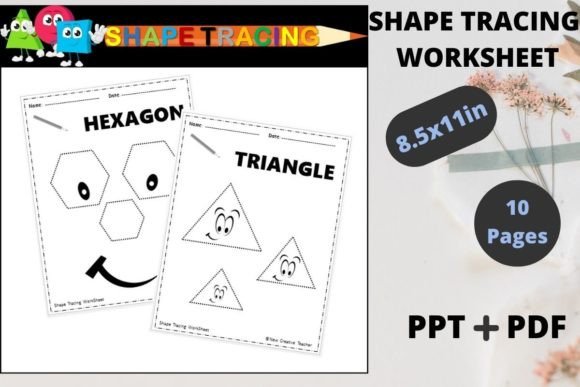
For those directly supporting young learners, the shape tracing worksheet is a practical introduction to geometry. The nine common shapes—circle, square, triangle, rectangle, hexagon, pentagon, heart, star, and rhombus—form the visual vocabulary of our world. Tracing these shapes builds confidence. A child who can successfully trace a triangle gains not just motor skill, but the pride of creation, which fuels further exploration.
Parents often seek activities that balance fun with developmental progress. These sheets offer a clear, achievable task. They don’t require special materials or extensive preparation, aligning perfectly with the need for ease of use. For educators, a set of ten practice sheets provides a structured progression. They can observe which shapes a student finds challenging (the hexagon’s multiple angles versus the circle’s continuous curve) and tailor subsequent support. Here, the quality of the worksheet—the clarity of the lines, the appropriate size for small hands—is paramount.
For Creators and Hobbyists: A Template for Creativity
Outside the classroom, a shape tracing worksheet transforms into a template. Crafters, DIY enthusiasts, and even small business owners making handmade cards or signs can use these clean shapes as a starting point. Tracing a perfect star or heart onto fabric, wood, or cardstock ensures consistency and accuracy that freehand drawing might not provide. This shifts the priority to precision and commercial value. A consistent, well-shaped logo element for a homemade product can elevate its presentation.
Digital creators, such as bloggers or content makers designing printables themselves, might evaluate these worksheets from a design perspective. They consider the flexibility of the asset: is it scalable? Can the lines be easily edited in a software program? The simple, broken-line style is inherently designed for tracing, making it a perfect base layer for more complex digital artwork aimed at other adults or children.
Identifying Your Own Goals with This Resource
How do you determine if a set of shape tracing practice sheets aligns with your needs? Start by asking what you want the end result to be. Is it a child’s improved pencil grip and shape vocabulary? Is it a collection of uniform shapes for a physical art project? Or is it a digital asset to incorporate into your own educational product?
- For Learning & Development: Prioritize sheets that offer a logical progression, from simple (circle, square) to more complex (hexagon, rhombus). Check that the tracing lines are distinct and the paper quality is suitable for pencils or crayons. The inclusion of a heart and star, while not geometric, is excellent for engaging young interests and expanding recognition beyond strict geometry.
- For Creative & Professional Use: Look for clean, high-resolution versions. Consider if you need a single shape or the full set of nine. For commercial use, ensure the resource is offered with appropriate licensing. The speed and reliability of having a perfect shape at your fingertips, rather than drafting it yourself, can be a significant time-saver.
An entrepreneur running a small tutoring center might use these sheets as part of a packaged learning kit for clients, valuing both their learning value and their presentation as part of a professional service. A freelance illustrator might use a traced pentagon as the basis for a pattern in a children’s book, valuing the creativity it sparks from a simple starting point.
The Practical Application Across Scenarios
Let’s translate these priorities into concrete examples. A parent, working with their four-year-old, might spend ten minutes a day on one shape tracing worksheet, celebrating each successful trace to build confidence. An educator in a busy classroom might have a binder of these sheets ready for independent “table time” activities, providing a reliable task that reinforces lessons from the morning.
A hobbyist making homemade holiday ornaments could trace multiple stars from a worksheet onto felt, cutting them out to create a uniform set of decorations. A marketer designing a simple infographic about growth could use a traced circle and triangle as clean, recognizable icons to represent different concepts. In each case, the same fundamental resource—a page with a shape outline—is applied with a different intention and a different set of evaluative criteria.
Ultimately, the shape tracing worksheet stands as a testament to how basic tools can serve advanced and varied purposes. Its value isn’t locked within its lines; it’s unlocked by the goal of the person using it. By understanding your own priorities—whether they lean towards educational foundation, creative efficiency, or professional consistency—you can leverage this simple resource to its full potential.