Circle Shaped Maze Puzzles: A Unique Format for KDP Puzzle Books
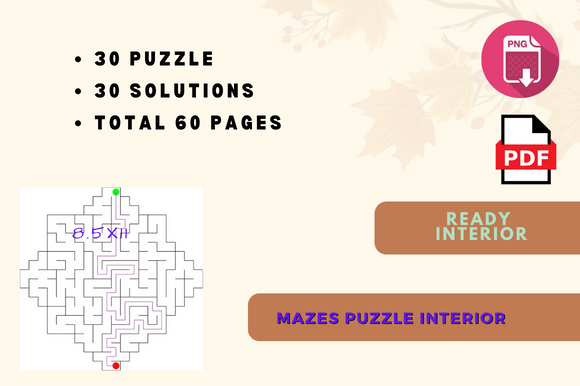
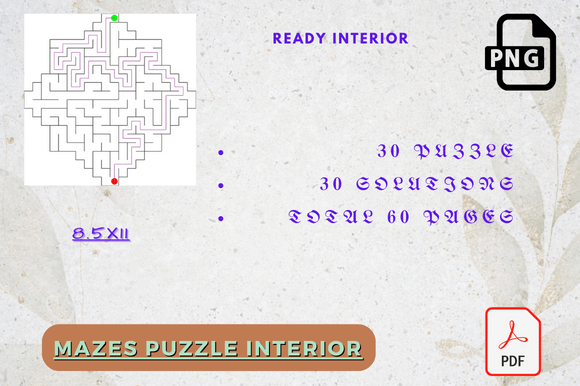
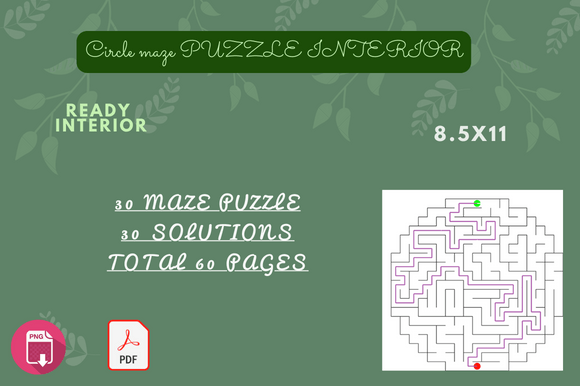
For independent authors and puzzle creators exploring the Kindle Direct Publishing (KDP) marketplace, interior design choices are a critical part of product differentiation. One format gaining attention is a specialized puzzle book interior known as the Circle Shaped Maze 30 Puzzles Interior. This product is a ready-to-upload PDF file containing 30 distinct circular mazes, each presented on its own page, accompanied by a separate solutions section. The total package typically comprises 60 pages formatted for the standard 8.5"x11" paperback size.
What Makes a Circle Maze Interior Distinct?
Unlike traditional rectangular or square maze layouts, the circular format introduces a unique visual and cognitive challenge. The paths and dead-ends radiate from or circle around a central point, often creating a more organic and aesthetically pleasing puzzle. This Circle Shaped Maze 30 Puzzles Interior capitalizes on this distinct geometry. Its primary value lies in being a complete, pre-designed KDP interior. For publishers, this means bypassing the time and technical skill required to design, align, and format 30 individual puzzles and their solutions into a print-ready PDF. The product is presented as "all-new content," implying fresh, unpublished maze designs specifically created for this commercial interior package.
The circular shape itself can influence the solving experience. Solvers might find that navigation feels less linear, with visual cues differing from corner-based mazes. This can appeal to enthusiasts looking for variety beyond the standard grid-based puzzles prevalent in many mass-market books. The format's inherent symmetry and radial complexity can also make for an engaging visual product when printed.
Comparing Interior Formats: Bespoke Design vs. Ready-Made KDP Interiors
When evaluating options for publishing a maze puzzle book on KDP, creators typically face a choice between custom design and utilizing pre-made interiors. Designing a book from scratch offers maximum creative control. One can dictate the exact maze styles, difficulty progression, graphic elements, and page layout. However, this path demands significant expertise in graphic design software, a deep understanding of KDP's precise formatting requirements for bleed and margins, and a considerable investment of time.
The alternative, which includes products like the Circle Shaped Maze 30 Puzzles Interior, is to purchase a professionally prepared interior. The tradeoffs here are clear. You sacrifice granular creative control over each maze's design for convenience, speed, and guaranteed technical compliance. The interior is a turnkey solution; you upload the PDF, set your cover, and proceed to publishing. The strength of this approach is its efficiency, especially for publishers focusing on rapid portfolio expansion or those without design skills. The limitation is that your book's interior will be identical to that of any other publisher who purchases the same file, potentially affecting uniqueness in a crowded market.
A practical comparison might consider a publisher aiming to release a series of themed maze books. For a "Geometric Mazes" series, this circular interior could be an ideal, cohesive volume. For a more eclectic "World of Mazes" series mixing shapes and themes, a single-shape interior might feel restrictive, prompting a need for custom design or a mixed-shape interior package.
Evaluating the Content: New Generation Mazes and Volume
A key claim associated with many KDP interiors is that the content is "newly generated." This is a crucial factor for publishers concerned about originality and copyright. A Circle Shaped Maze 30 Puzzles Interior that promises all-new mazes offers an advantage over interiors that might repurpose or replicate commonly found puzzles. It reduces the risk of publishing a book that feels familiar or derivative to consumers.
The volume of 30 mazes on single pages, plus solutions, resulting in a 60-page book, fits a specific market niche. It's substantial enough to be perceived as a full puzzle book, not a pamphlet, which is important for customer satisfaction in the paperback space. However, it's a contained set. For publishers targeting the avid puzzle solver who desires hundreds of puzzles in one tome, this 30-maze format would be a limitation, and a larger-count interior or custom project would be a better fit. Conversely, for casual solvers or as a gift book, 30 puzzles can represent a satisfying, manageable challenge without being overwhelming.
Decision Factors: When This Interior Is the Right Fit
Choosing the Circle Shaped Maze 30 Puzzles Interior is most aligned with certain project goals and publisher profiles.
Consider this interior if: your primary aim is to launch a professionally formatted maze book quickly; you have limited graphic design capability or wish to allocate your time to marketing instead of design; your book's concept is specifically centered on circular or radial puzzles (e.g., "Orbital Puzzles," "Circle Quest"); you value the assurance of technically correct margins and bleed for KDP print; and you are building a portfolio where having a variety of shapes (circle, square, star) across different books is your strategy.
You may need another option if: your vision requires a specific difficulty curve where mazes progress from simple to extremely complex, as pre-made interiors may not offer this graded design; you want to integrate other elements like story narratives, thematic illustrations, or mixed puzzle types (e.g., mazes and sudoku) alongside your circles; you require a unique brand identity where your interior design itself is a trademark; or you are targeting a market segment, like educational mazes for children, where the circular mazes might need tailored, age-appropriate complexity and accompanying visuals.
Strengths and Tradeoffs of the Single-Shape, Fixed-Count Model
The model of a 30-puzzle, single-shape interior presents clear strengths and inherent tradeoffs. Its strength is in specialization and coherence. A book dedicated solely to circle mazes can appeal strongly to a solver seeking that particular experience. It allows for deep exploration of one puzzle geometry. From a production standpoint, it's a streamlined, focused product for the publisher.
The tradeoff is flexibility. Compared to a modular interior package that offers, say, 10 circles, 10 squares, and 10 stars, this focused interior doesn't provide variety within the same book. Some consumers prefer mixed puzzle books, viewing them as a more diverse activity. Therefore, selecting this interior means your book will be evaluated by the market specifically on the appeal of circular mazes. Its success will be tightly coupled to the quality and novelty of those 30 specific designs included in the file.
Another practical consideration is the "one maze per page" layout. This is a clean, user-friendly presentation, giving the solver a spacious, uncluttered working area—a significant benefit for adult solvers who dislike cramped puzzles. However, it dictates the book's length. To increase page count without increasing puzzle count, a publisher would need to add introductory pages, tips, or other content, which might require merging PDFs or additional design work.
Beyond Circles: Exploring Related KDP Puzzle Interior Categories
Understanding the Circle Shaped Maze 30 Puzzles Interior also involves recognizing the categories of alternatives around it. The KDP ecosystem includes numerous pre-made interiors for puzzle books. These often fall into shape-based categories (star mazes, square mazes, hexagon mazes), difficulty-based categories (easy, medium, hard bundles), or theme-based categories (holiday mazes, animal mazes). Some are pure maze books, while others blend maze types with logic puzzles.
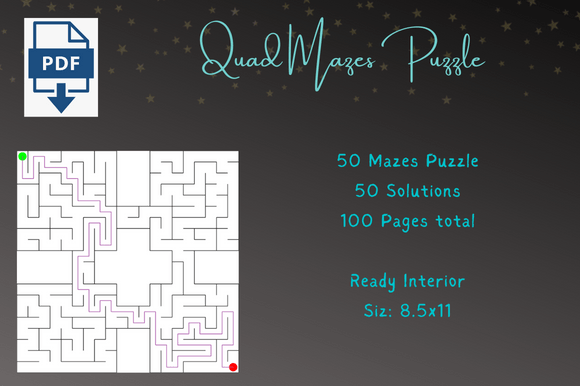
A star maze interior, for instance, shares the "specialized shape" characteristic but offers a different visual and solving dynamic, with paths extending from a central point along angled vectors. Evaluating these options requires a publisher to think about market segmentation. Is there a discernible audience for star mazes versus circle mazes? Often, the choice becomes subjective or based on perceived visual appeal. The key is to analyze customer reviews and sales patterns of existing books in each shape category to gauge interest, though direct data can be elusive.
Another relevant comparison is to interiors with higher puzzle densities, such as two mazes per page. This format creates a longer puzzle list within a similar page count, which can be perceived as higher value by some customers. However, it compromises the spacious, premium feel of the single-puzzle page. The decision here hinges on the target audience's preference: adults often favor the less cluttered, more relaxed presentation of one puzzle per page, aligning well with the design of the Circle Shaped Maze 30 Puzzles Interior.
Making an Informed Choice for Your Puzzle Book Project
Selecting any KDP interior, including this circular maze set, is a strategic decision that balances creative goals with practical constraints. For the publisher whose priority is a swift, technically sound entry into the maze book market with a visually distinct product, this interior can be an excellent resource. It provides a complete, coherent book core around a specific puzzle type.
However, informed decision-making requires honest assessment of your project's needs. If brand uniqueness and total creative control are your highest priorities, the path of custom design, possibly even hiring a maze artist and a designer, will yield a more distinctive product. If speed and convenience are paramount, and the circular theme aligns with your concept, then a pre-made interior is a logical, efficient choice.
Ultimately, products like the Circle Shaped Maze 30 Puzzles Interior serve a vital role in the KDP ecosystem. They lower the barrier to entry for content creators, allowing those with puzzle-generation skills but not design skills to publish, and they provide a reliable, standardized product format that meets platform specifications. By understanding its specific offering—30 new circular mazes in a ready-to-upload 60-page PDF—you can accurately judge whether it fits the puzzle book you envision or if your vision necessitates a different approach entirely.